Skip to content
A concrete walkway does more than connect your home to the street or add another visual element to your yard. It creates curb appeal, handles daily foot traffic, and provides safe access to your home. But looks alone do not make a good walkway. The best concrete walkway ideas must be designed to withstand Santa Fe’s demanding high-desert climate. That is the unique dilemma New Mexico homeowners face.
Santa Fe’s hot summers, freezing winter nights, monsoon rainfall, and shifting soils can put significant stress on concrete. Proper subgrade preparation, concrete mix, drainage, and joint placement are essential to reducing cracking, heaving, and premature deterioration.
With the right design and professional installation, a concrete walkway can provide decades of dependable performance with relatively little maintenance. Our team of skilled and experienced concrete pros can help you find the best modern concrete walkway ideas that balance visual appeal with practical use.
This guide explores the concrete walkway ideas and planning decisions that matter most for New Mexico homes. Here we include modern and stamped finishes, material choices, Santa Fe-inspired designs, and installation practices to create a durable, attractive walkway. Let’s take a closer look now at some popular walkway designs for Santa Fe homes!
CHOOSING THE RIGHT CONCRETE WALKWAY DESIGN FOR YOUR PROPERTY
The right concrete walkway design should balance three factors. These are: how people will use the path, your home’s architectural style, and the soil and drainage conditions on your property. In Santa Fe, all three can affect both appearance and long-term performance.
Here is how these considerations can impact your concrete walkway installation in the local area:
1. Choose a Straight or Curved Layout
Straight walkways offer a clean, efficient appearance and work especially well with modern and contemporary homes. They are also simpler to form and joint correctly.
Curved walkways create a softer, more organic approach that complements more traditional and high-desert-style homes. Curves require more precise forming and joint placement, but they can add substantial curb appeal when properly installed.
Quick tip: Choose the layout that complements your home’s architecture rather than simply following the easiest route or ticking the modern walkway design boxes.
2. Plan the Right Walkway Width
For most residential properties:
- 3 feet: Suitable for side-yard and utility paths
- 4 feet: Comfortable for two people and ideal for many front entries
- 5+ feet: Better for larger approaches, entertaining areas, and accessibility needs
A wider walkway can also create a stronger visual connection among the landscaping, the driveway, and the front entry.
Quick tip: Consider who uses the pathway, as children, older adults, or larger families may affect walkway width design implementation.
3. Match Thickness to How the Walkway Is Used
A typical residential concrete walkway should be at least 4 inches thick when properly supported by a suitable base.
Areas exposed to heavier loads need additional consideration:
- Standard foot traffic: Typically 4 inches
- Driveway or vehicle crossings: Often 6 inches with appropriate reinforcement
- Problematic or expansive soils: May require additional thickness, reinforcement, or engineered site preparation
The exact specification should be based on site conditions, expected loads, drainage, and local construction requirements.
Quick tip: Our local home concrete walkway planning process will make it easier to nail down material and thickness before installation begins.
4. Consider Santa Fe Soil and Drainage
Walkway design isn’t only about the surface. Santa Fe-area properties can have challenging soil conditions, including expansive soils and caliche.
Proper installation should address:
- Stable subgrade preparation
- Appropriate aggregate base
- Positive drainage away from structures
- Proper control-joint placement
- Reinforcement where site conditions warrant it
Bottom line: A beautiful walkway can still fail prematurely if the base and drainage are overlooked.
Quick tip: It is always better to spend time laying the foundation correctly, as it will support the entire walkway and establish its overall strength from the start.

Concrete Walkway Design at a Glance – Best Concrete Walkway Design Ideas in New Mexico
| Design Decision | Best For | Key Consideration |
| Straight layout | Modern/contemporary homes | Clean lines and efficient installation |
| Curved layout | Adobe/Pueblo-style homes | Softer appearance and more complex forming |
| 3-foot width | Side paths | Space-efficient |
| 4-foot width | Front entries | Comfortable everyday use |
| 5+ feet | Large entries/accessibility | More maneuvering space |
| 4-inch thickness | Standard foot traffic | Requires proper base preparation |
| 6-inch thickness | Vehicle crossings | Designed for heavier loads |
Think Beyond the Concrete
The strongest front walkway design ideas consider the entire approach to the home. Concrete color, texture, edges, landscaping, lighting, and the property’s architectural style should work together.
For Santa Fe homeowners, a professional site evaluation can help determine which concrete walkway ideas will provide the right combination of appearance, drainage, durability, and long-term value.
SUBGRADE PREPARATION: THE FOUNDATION BENEATH YOUR WALKWAY
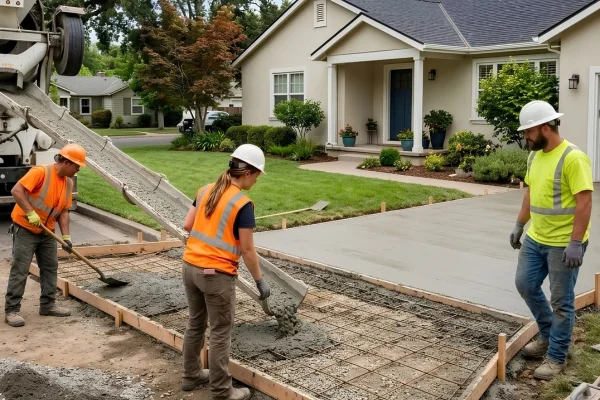
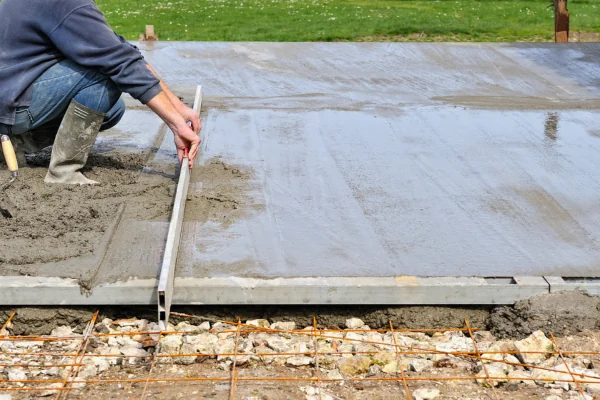
A durable concrete walkway starts below the surface. In Santa Fe, proper excavation, compaction, and drainage help prevent settling, cracking, and movement caused by challenging soil conditions.
Excavate and Compact the Base
Santa Fe-area soils can contain clay and caliche that expand and contract with moisture. Contractors typically excavate unstable soil and install a compacted aggregate base to create a stable foundation.
The base should be placed and compacted in layers rather than simply leveled before pouring the concrete. Proper compaction helps reduce future settlement and cracking.
Grade for Proper Drainage
Good drainage is essential during Santa Fe’s intense summer monsoons. Walkways should slope away from the home’s foundation and toward an appropriate drainage area.
A typical walkway uses a 1% to 2% cross-slope to move water away from the surface. Properties with challenging slopes or drainage patterns may require additional site planning before installation.
Why all of this matters: Even high-quality concrete can crack or settle when it’s installed over an unstable or poorly drained base. Getting the subgrade and foundation laid correctly will impact the entire walkway system from that point onward. Getting the foundation right is absolutely critical.
CONCRETE MIX DESIGN FOR NEW MEXICO’S HIGH-DESERT CLIMATE
Concrete for a Santa Fe walkway should be selected for freeze-thaw exposure, moisture, temperature swings, and high-desert conditions. The right mix can improve durability and reduce problems such as scaling, cracking, and surface deterioration.
Strength and Air Entrainment
For exterior walkways, a 4,000 PSI mix is a common specification, although the project requirements and local conditions should determine the appropriate strength.
Because Santa Fe experiences freezing temperatures, air-entrained concrete may be appropriate for freeze-thaw exposure. Microscopic air pockets give expanding water room to move, helping reduce freeze-thaw damage and surface spalling.
Control Water and Cure Properly
The water-to-cement ratio also affects concrete durability. Too much water can weaken the finished slab and increase the risk of scaling and surface damage.
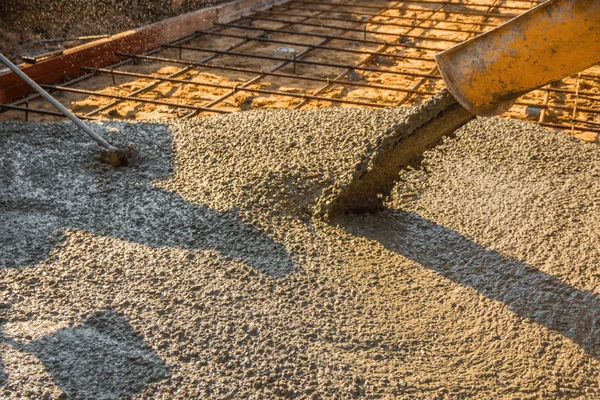
Proper curing is equally important. Keeping newly placed concrete adequately moist for the recommended curing period allows it to develop strength and durability. Curing compounds, plastic sheeting, or other approved methods may be used depending on site conditions.
Bottom line: The concrete mix should be selected for the property’s exposure conditions—not simply based on the cheapest standard mix available.

EXPANSION JOINTS AND CONTROL JOINTS: MANAGING THERMAL MOVEMENT
Concrete naturally shrinks as it cures and expands and contracts with temperature changes. In Santa Fe’s high-desert climate, properly placed joints help control that movement and reduce random cracking.
Control Joints Guide Cracking
Control joints create planned lines of weakness so shrinkage cracks are more likely to form where intended.
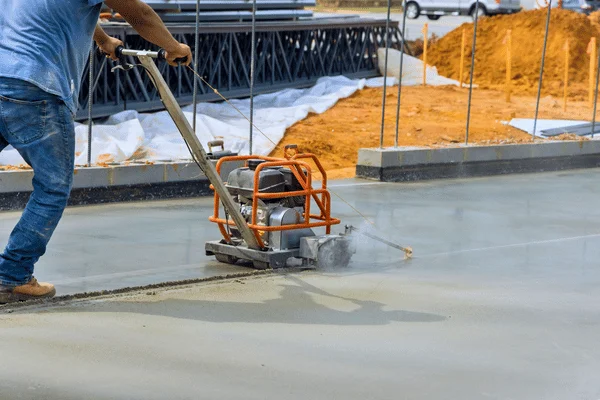
For a typical 4-inch walkway, joints are commonly spaced around 4 to 5 feet apart and cut or tooled to approximately one-quarter of the slab depth. Saw-cut timing depends on weather and concrete conditions, but the goal is to make the cuts before uncontrolled shrinkage cracking begins.
Separate Walkways From Fixed Structures
Where a walkway meets a foundation, steps, driveway, or other fixed concrete, an isolation or expansion joint can allow the two surfaces to move independently.
This small installation detail can help prevent stress from transferring between connected slabs and causing unwanted cracking.
Why it matters: Thoughtful joint placement doesn’t prevent concrete from moving. It gives that movement a controlled place to occur.
DECORATIVE CONCRETE WALKWAY IDEAS THAT COMPLEMENT SANTA FE STYLE
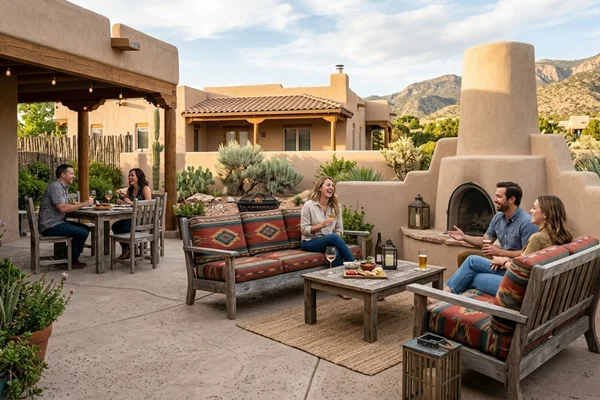
Concrete can be much more than a plain gray path. The right finish, color, pattern, and edging can turn a walkway into an attractive feature that complements Santa Fe’s adobe, Pueblo, territorial, and modern architecture.
1. Stamped Concrete
Stamped concrete can replicate the appearance of flagstone, slate, brick, tile, and other materials while providing the performance of a concrete walkway.

Benefits:
- Creates a high-end stone or tile appearance
- Works well with Santa Fe and Pueblo-style homes
- Available in warm earth-tone colors
- Offers extensive pattern and color combinations
- Can provide a more affordable alternative to natural stone
2. Stained Concrete
Concrete stains add color without creating a heavily textured surface, making them a strong option for modern concrete walkway ideas.

Benefits:
- Subtle, natural-looking color variation
- Works well with modern and contemporary homes
- Can complement stucco, stone, and desert landscaping
- Available in earthy and neutral tones
- Maintains a clean, streamlined appearance
3. Broom-Finished Concrete
A broom finish creates a light surface texture that provides traction while keeping the walkway simple and practical.

Benefits:
- Cost-effective
- Provides slip resistance
- Works with almost any architectural style
- Easy to maintain
- Can be combined with colored or decorative concrete
4. Exposed Aggregate
Exposed aggregate reveals decorative stone within the concrete surface, creating texture and visual interest.

Benefits:
- Distinctive natural appearance
- Good traction for outdoor walkways
- Works well with Southwestern landscaping
- Available in different aggregate colors and sizes
- Can create a custom, high-end appearance
5. Colored Concrete
Integral or surface-applied color can move a walkway beyond basic gray while maintaining a relatively simple design.

Benefits:
- Complements stucco and adobe exteriors
- Earth tones blend naturally with desert landscaping
- Works with stamped or textured finishes
- Creates a more intentional design
- Can coordinate with walls, patios, and retaining features
6. Decorative Borders and Bands
A contrasting border can define the edges of a walkway and make a simple concrete design look more customized.

Benefits:
- Adds visual definition
- Creates contrast without covering the entire walkway
- Works with stamped, broom-finished, or colored concrete
- Can emphasize curved or geometric layouts
7. Modern Concrete Walkway Designs
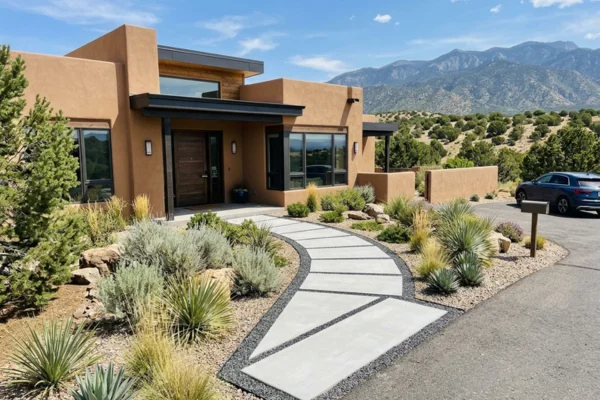
For contemporary Santa Fe homes, consider clean lines, large geometric sections, subtle colors, and minimalist edging.

Benefits:
- Complements modern architecture
- Creates a clean visual approach to the entry
- Pairs well with gravel, rock, and xeriscaping
- Keeps the design simple and low-maintenance
Which Concrete Finish Is Right for Your Home?
The best choice depends on your home’s architecture, landscaping, budget, maintenance expectations, and desired appearance. A professional concrete contractor can help match the walkway design, finish, color, and installation approach to your property, rather than treating every project the same way.
LONG-TERM VALUE AND ROI OF A PROFESSIONAL CONCRETE WALKWAY
A well-designed concrete walkway can enhance curb appeal, safety, accessibility, and everyday usability while providing your property with a durable entry feature.
Why Professional Installation Matters
The value of a concrete walkway isn’t just its appearance. Proper installation helps the surface perform over time.
Key benefits include:
- Long-term durability: Properly prepared concrete can provide decades of service.
- Better curb appeal: Clean lines, decorative finishes, and thoughtful layouts create a stronger first impression.
- Improved safety: Even, properly graded surfaces provide safer footing for residents and visitors.
- Lower maintenance: Concrete generally requires less routine maintenance than many alternative walkway materials.
- Design flexibility: Colors, textures, patterns, borders, and layouts can complement almost any Santa Fe home.
- Better functionality: A well-planned walkway creates a clear, comfortable connection between the street, driveway, landscaping, and front entry.
Concrete Walkway vs. Other Materials
Concrete is one of several walkway options available to Santa Fe homeowners. The best choice depends on budget, appearance, maintenance requirements, soil conditions, and how the walkway will be used.
For properties where durability, design flexibility, and relatively low maintenance are priorities, professionally installed concrete can offer strong long-term value.
Bottom line: A quality walkway should enhance your property today while being designed to perform for years to come.
CONCRETE WALKWAY INSTALLATION FOR SANTA FE HOMEOWNERS- GET STARTED TODAY
The right concrete walkway design should do more than improve your home’s curb appeal. It should complement your property, provide safe, comfortable access, and withstand Santa Fe’s sun, temperature extremes, seasonal moisture, and challenging soil conditions.
From modern concrete walkway designs and stamped finishes to simple broom-finished paths, the right solution depends on your home’s style, site conditions, drainage, and how you plan to use the space. Professional planning and installation can help prevent common problems such as premature cracking, settling, and drainage issues.
Ready to Improve Your Walkway?
Santa Fe Concrete Contractors brings local experience and practical knowledge to residential and commercial concrete projects throughout the Santa Fe area. We’ll evaluate your property, discuss your design goals, and help you choose a walkway solution that fits your home, budget, and long-term needs.
Request your free concrete walkway estimate today. Contact Santa Fe Concrete Contractors to discuss your project, explore concrete walkway ideas, and get a straightforward recommendation from a local team.

FREQUENTLY ASKED QUESTIONS
What is the average cost of a concrete walkway in Santa Fe, New Mexico?
A concrete walkway in Santa Fe typically costs about $8–$18 per square foot for standard concrete, while decorative options may cost approximately $12–$25 per square foot. Final pricing depends on walkway size, thickness, excavation, base preparation, finish, access, and site conditions.
How can I make a concrete walkway more attractive without replacing it?
If an existing walkway is structurally sound, staining, decorative overlays, saw-cut patterns, or a new finish can improve its appearance without complete replacement. However, significant cracking, settling, or heaving should be addressed before applying decorative treatments. A contractor can determine whether resurfacing is appropriate.
Can concrete be poured directly onto dirt for a walkway?
Concrete should not typically be poured directly onto unprepared dirt. Proper walkway installation requires preparing and compacting the subgrade and, when appropriate, installing a compacted aggregate base. This provides more uniform support and helps reduce cracking, settling, and drainage problems caused by unstable or moisture-sensitive soils.
Is a concrete walkway cheaper than pavers in New Mexico?
Concrete is often less expensive to install than comparable paver systems, although actual costs vary by material, design, site preparation, and labor. Concrete can also require less routine maintenance. In areas with challenging soils, proper base preparation is important regardless of whether you choose concrete or pavers.
How do freeze-thaw cycles affect concrete walkways in Santa Fe?
Freeze-thaw cycles can contribute to cracking, scaling, and surface deterioration when moisture enters concrete and repeatedly freezes and expands. Proper drainage, an appropriate concrete mix, adequate curing, correctly placed joints, and suitable sealing can help protect exterior walkways from Santa Fe’s seasonal temperature changes.
What are the best concrete walkway ideas for Santa Fe homes?
The best concrete walkway ideas balance durability with the property’s architectural style. Popular options include stamped concrete, colored concrete, exposed aggregate, broom finishes, decorative borders, and clean modern layouts. Earth-tone colors and natural stone-inspired patterns can complement adobe, Pueblo, territorial, and Southwestern homes.
What are the best modern concrete walkway designs?
Modern concrete walkway designs typically emphasize clean lines, simple geometric shapes, subtle colors, and minimal decorative detailing. Large rectangular sections, smooth or lightly textured finishes, contrasting borders, and carefully integrated landscaping can create a contemporary aesthetic that works particularly well with modern, minimalist Santa Fe homes.
Is stamped concrete a good choice for a walkway?
Stamped concrete can be an excellent walkway option when homeowners want the appearance of natural stone, slate, brick, or tile without installing individual pieces. It offers extensive pattern and color choices, but proper installation and exterior sealing are important for maintaining its appearance and durability.
What walkway material is best for a Santa Fe home?
Concrete is a versatile choice for Santa Fe walkways because it offers numerous finishes, colors, patterns, and layout options. However, the best material depends on your budget, architectural style, maintenance preferences, drainage, soil conditions, and intended use. A site assessment can help determine the most appropriate option.
How thick should a concrete walkway be?
A standard residential concrete walkway is commonly about 4 inches thick when properly supported by a suitable base. Walkways crossing driveways or exposed to vehicle loads may require additional thickness and reinforcement. Final specifications should account for expected loads, soil conditions, drainage, and applicable local requirements.
How long does a concrete walkway last in New Mexico?
A properly designed and installed concrete walkway can provide decades of service, although its lifespan depends on soil conditions, drainage, concrete quality, installation, climate exposure, and maintenance. Proper jointing and base preparation are particularly important for reducing premature cracking, settling, and surface deterioration.
Do concrete walkways need to be sealed in Santa Fe?
Sealing is not required for every concrete walkway, but it can provide valuable protection, particularly for decorative concrete. A suitable exterior sealer can help reduce moisture penetration, staining, and weather-related surface deterioration. Decorative finishes may also require periodic resealing according to the product and exposure conditions.